
Data Leak Protection (DLP)
is the name of several policies in Office 365, setting up what data can, and can’t be, shared and with whom.
Imagine being able to automatically identify private information like passport numbers, Health IDs or bank account details and make sure that those are only being shared with people that are authorised to see them.
The good news is that you can do this with 365, provided you turn on the policies and set them up correctly, and monitor when data is shared.
Under the NZ Privacy Act, we’re all expected to take care of personal data entrusted to us and to make sure it’s only used for the purpose for which is being obtained.
With Office 365, there’s no excuse for that to be breached provided that we understand what data should be kept, what might be kept incorrectly, and how its being shared. With this we can set up rules to monitor your Office 365 system and report on how records are shared.
We include a basic set up of DLP in our KARE for Security S2 plan to get you started.

Webinar Replay: Unpacking your Microsoft Secure Score
Your Microsoft Secure Score gets talked about a lot. But what does it actually tell you — and what doesn’t it cover? In this 30‑minute, plain‑English webinar, we take a closer look at Microsoft Secure Score and explain how to use it as a practical security roadmap,...
Sent isn’t the same as delivered: when your own emails get blocked
A cautionary tale from inside Kinetics There's an assumption almost every business runs on: if I hit send, the email arrived. It's so deeply ingrained that we usually only question it when a customer says, "I never got that quote." And even then, the first instinct is...
Microsoft Edge Exposes Saved Passwords
Is you browser giving your passwords away? If your team uses Microsoft Edge and saves passwords in the browser, every one of those credentials is sitting in plain, readable text in your computer's memory from the moment Edge launches. A security researcher has...
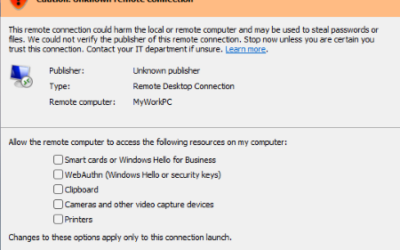
That New Windows Warning About Remote Desktop? Don’t Ignore It.
If you've opened a Remote Desktop connection file today and been greeted by an unfamiliar orange warning banner: "Caution: Unknown remote connection" then you are not imagining things. Microsoft has introduced new protections as part of its April 2026 cumulative...

Webinar Replay: Beyond Antivirus: Understanding MDR and ITDR for Modern Cyber Defence
Your traditional security isn't stopping today's attacks. Here's what will. The Problem Every NZ Business Faces Your business has antivirus software. You have firewalls. You've implemented email filtering. Yet cybercriminals are increasingly successful at bypassing...
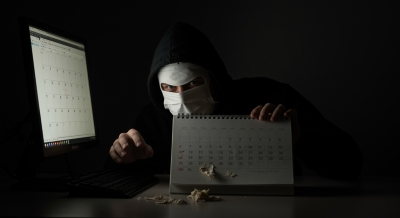
When “Legitimate” Tools Are Used Illegitimately (like booking a meeting time)
Cyber awareness isn’t just about blocking malware — it’s about recognising intent. Recently, we received a callout from a client after a user received what initially appeared to be a genuine business opportunity. The email exchange seemed credible, replies were...

Could you get into trouble with the law if you lose a USB stick?
A lost USB stick can be a notifiable privacy breach. Here’s why that matters It sounds old school, but USB sticks are still floating around plenty of NZ businesses. A recent draft decision note from the Office of the Privacy Commissioner is a timely reminder...
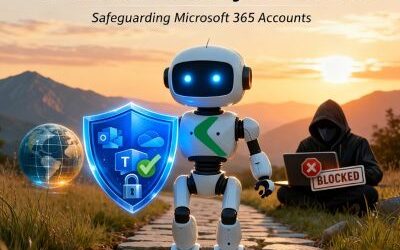
Additional M365 Security Protection Rolled Out for our KARE Foundation Customers
Turning up your cyber-security Kinetics is busy rolling out an additional security protection for Kinetics KARE Foundation customers only, designed to stop a highly active and sophisticated phishing campaign currently targeting Microsoft 365 environments worldwide. ...

Your (Home/Small Business) Router Could Be Working for Criminals Right Now
Right now, somewhere in the world, a home or office router is quietly routing cybercriminal traffic, and its owner is completely unaware. That's the reality revealed by the discovery of KadNap, a sophisticated malware campaign that has become one of the most...

When Geopolitical Conflict Becomes Your IT Problem
Lessons from the Stryker Cyberattack A global medical technology company. 56,000 employees. Operations in 60 countries. And in March 2026, systems wiped across every one of them — not because of a data breach or ransomware, but because of a school bombing in Iran....